$8.00
$12.00
50% OFF! Hot items selling fast—Grab them before they're gone!
 Unconditional Satisfaction GuaranteeNo Shipping Fees Above 302 Months to Decide. Returns Simplified.
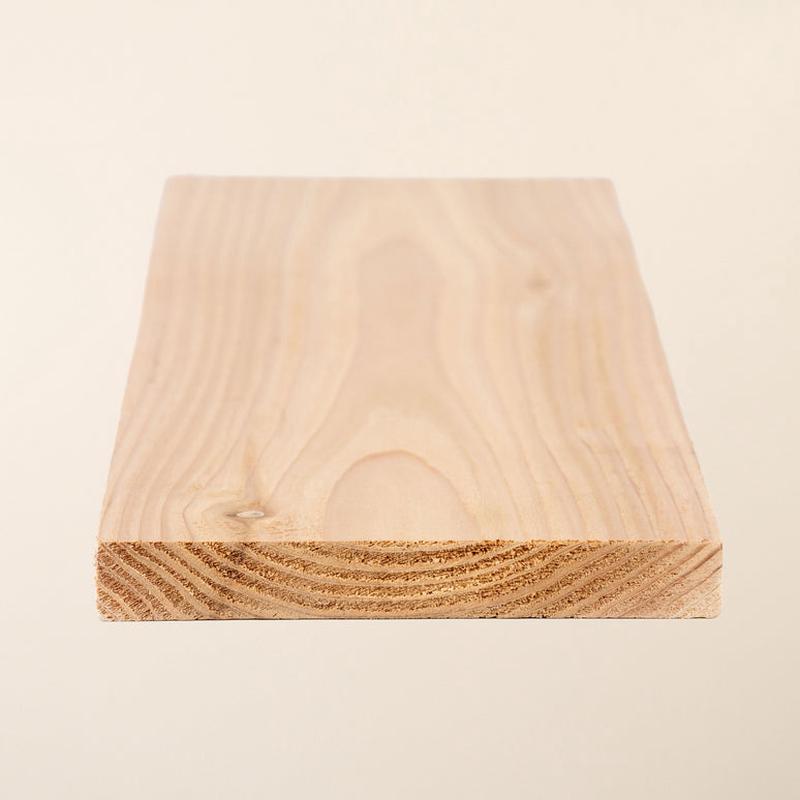
This home-grown British Cedar timber board is planed smooth for a refined, high-quality finish, making it ideal for joinery, cladding, furniture, shelving, and outdoor projects. Machined from UK-grown Western Red Cedar, it offers a warm, light reddish-brown tone that naturally weathers to an elegant silver-grey over time.
Cedar is a lightweight and durable softwood with natural resistance to decay and insects, meaning it performs well even without treatment.
For enhanced longevity and to maintain its rich colour, it can be finished with Osmo Natural Oil or UV-protective stains.
Finished Size: 145mm (width) x 19mm (thickness)
Available Lengths: 15cm sample, 1.8m, 2.4m, 3.0m, 3.6m & 4.8m
Timber Type: Home-grown Western Red Cedar (Softwood)
Surface Finish: Planed smooth (PAR)
Durability: Class 3 (moderate)
Movement Class: Medium
Colour: Light reddish-brown hues, ageing to silver-grey
Fixings: Use stainless steel
Recommended Wastage: 510%
Planed Cedar Boards (like this product) have been machined smooth on all faces, giving a clean, refined appearance and consistent dimensions. This makes them perfect for visible applications such as cladding, fencing slats, garden structures, or furniture, where a premium finish matters.
Sawn Cedar Boards have a rougher surface straight from the saw, retaining a more rustic and textured look. They are often used for subframes, hidden areas, or natural-style cladding where appearance is less critical.
Home-grown cedar is known for its sustainability and lower carbon footprint, often sourced from Devon and other UK regions. Compared to imported cedar, it features a slightly more open grain and visible knots (up to 50mm), adding to its natural, rustic charm.
This timber combines beauty, workability, and durability a natural, eco-friendly choice that enhances both traditional and contemporary designs.
1. Whats the difference between planed and sawn cedar boards?
Planed boards are machined smooth on all sides for a refined, even finish perfect for cladding, fencing, or decorative projects. Sawn boards are rough-cut with a textured surface, giving a more rustic look and slightly varying dimensions.
2. Is home-grown cedar as durable as imported Western Red Cedar?
Home-grown cedar is slightly less dense but still naturally durable (Class 3) and resistant to decay and insects. It performs very well outdoors, especially when treated with a protective oil or stain.
3. Does cedar need treating before use?
Cedar is naturally weather-resistant and can be used untreated. However, applying a UV-protective oil or Osmo stain helps preserve its original colour and extends its lifespan.
4. What colour does British cedar turn as it weathers?
Fresh cedar displays warm reddish-brown tones that gradually weather to a beautiful silver-grey when exposed to sunlight and rain.
5. What fixings should be used with cedar boards?
Always use stainless steel screws or nails to prevent staining and corrosion, as cedar can react with standard steel fixings.
6. Can planed cedar be used for both indoor and outdoor projects?
Yes planed cedar is suitable for both interior joinery and exterior cladding or fencing. Its easy to cut, sand, and finish, offering excellent versatility.
7. Where is home-grown British cedar sourced from?
Home-grown Western Red Cedar is typically sourced from UK forests, often in Devon and southern England, reducing transport emissions and providing a more sustainable, locally produced option.