$5.00
$15.00
50% OFF! Hot items selling fast—Grab them before they're gone!
 Unconditional Satisfaction GuaranteeNo Shipping Fees Above 302 Months to Decide. Returns Simplified.
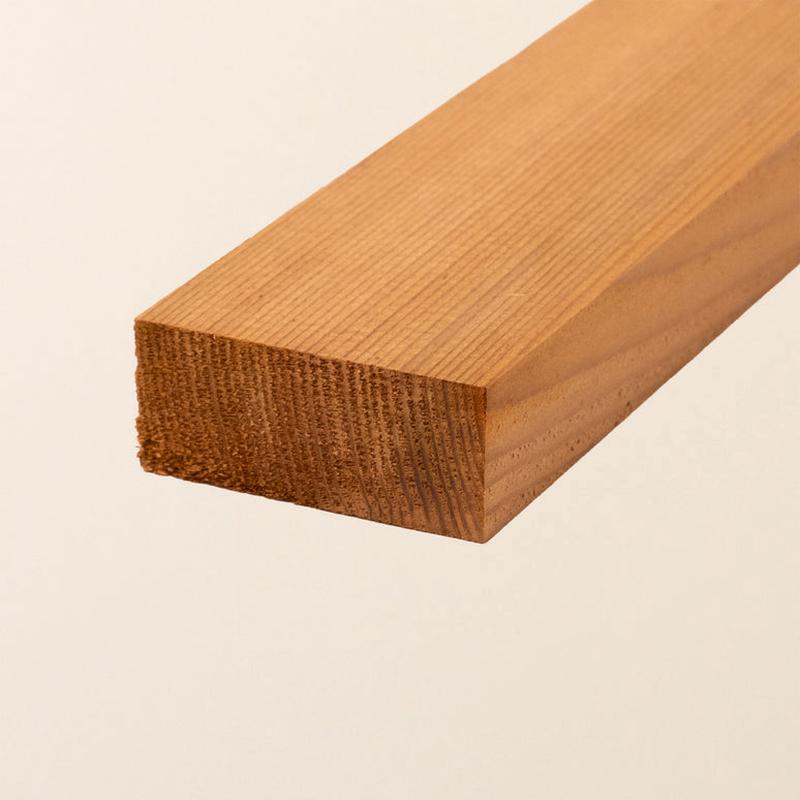
Crafted from home-grown British Western Red Cedar, this 4″ x 2″ planed timber board combines natural durability with a clean, refined appearance.
Machined smooth for precision and uniformity, it offers strength, stability, and a warm, modern finish suitable for a wide range of projects including bracing, framing, cladding trims, and structural detailing.
British Cedar is naturally rot-resistant, lightweight, and low-density, making it easy to handle and install while providing impressive longevity. Its attractive light reddish-brown tones gradually weather to a soft silver-grey, giving your project an elegant and timeless character with minimal maintenance.
This sustainable timber is locally sourced from UK forests, often in Devon, helping to reduce transport emissions and environmental impact. With its distinct grain and natural knots, home-grown cedar offers a rustic aesthetic that many find more characterful than imported alternatives.
For projects requiring enhanced colour retention, a UV-protective oil or Osmo stain can be applied to maintain the original tone and extend service life.
Width: 95 mm
Depth: 45 mm
Length: 3.6 m (12 ft)
Material: Home-Grown Western Red Cedar (Softwood)
Finish: Planed Smooth
Treatment: Untreated naturally durable timber
Durability: Class 3 (moderate)
Movement Class: Medium
Colour: Light reddish-brown, weathering to silver-grey
Fixings: Stainless steel recommended
Recommended Wastage: 510%
Origin: UK
Weight: Approx. 9.0 kg per board
Made from sustainably sourced, home-grown British Cedar
Naturally durable no treatment required
Smooth planed finish for a refined, modern look
Lightweight and easy to work with
Rustic character with visible knots and natural variation
Ideal for bracing, framing, trims, or matching cedar cladding
Environmentally responsible reduces carbon footprint
2. Is British cedar suitable for outdoor use?
Yes. Home-grown Western Red Cedar is naturally rot- and insect-resistant, making it ideal for exterior applications such as garden buildings, fencing, and architectural trims.
3. Does cedar need to be treated?
Cedar does not require treatment, but applying a UV-protective oil (such as Osmo) can help preserve its original warm colour and increase longevity.
4. How long does cedar last?
With proper installation and maintenance, cedar can last 2030 years or more, depending on exposure and care.
5. How does home-grown cedar differ from imported cedar?
Home-grown cedar has a more open grain and visible knots, giving it a rustic, characterful appearance. Its slightly less dense than imported Canadian cedar but offers excellent durability and sustainability.
6. What colour does cedar turn as it weathers?
Fresh cedar features light red-brown tones that naturally fade to a silver-grey patina when exposed to sunlight and moisture.
7. Can this timber be used internally?
Yes, it can be used indoors for decorative trims, furniture framing, or interior detailing, though its primarily intended for exterior use.
8. What type of fixings should be used?
Always use stainless steel fixings to prevent corrosion and staining, as cedar can react with regular steel.
9. Is this timber planed on all sides?
Yes. It is planed smooth (PAR) for a consistent, high-quality finish suitable for visible applications.
10. Is home-grown cedar sustainable?
Yes. Its a UK-sourced, renewable timber, often grown in the southwest of England, significantly reducing carbon footprint compared to imported alternatives.